
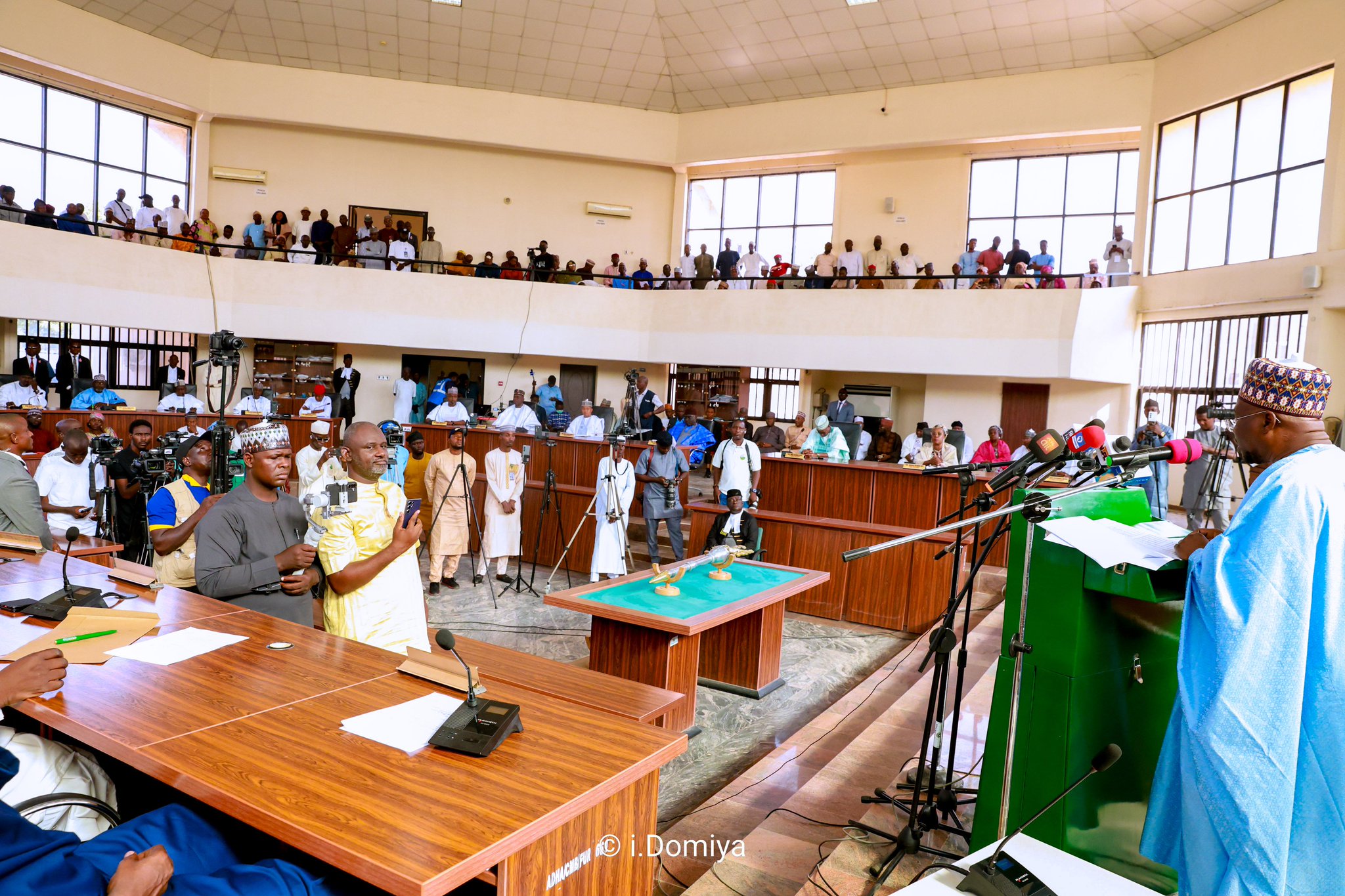
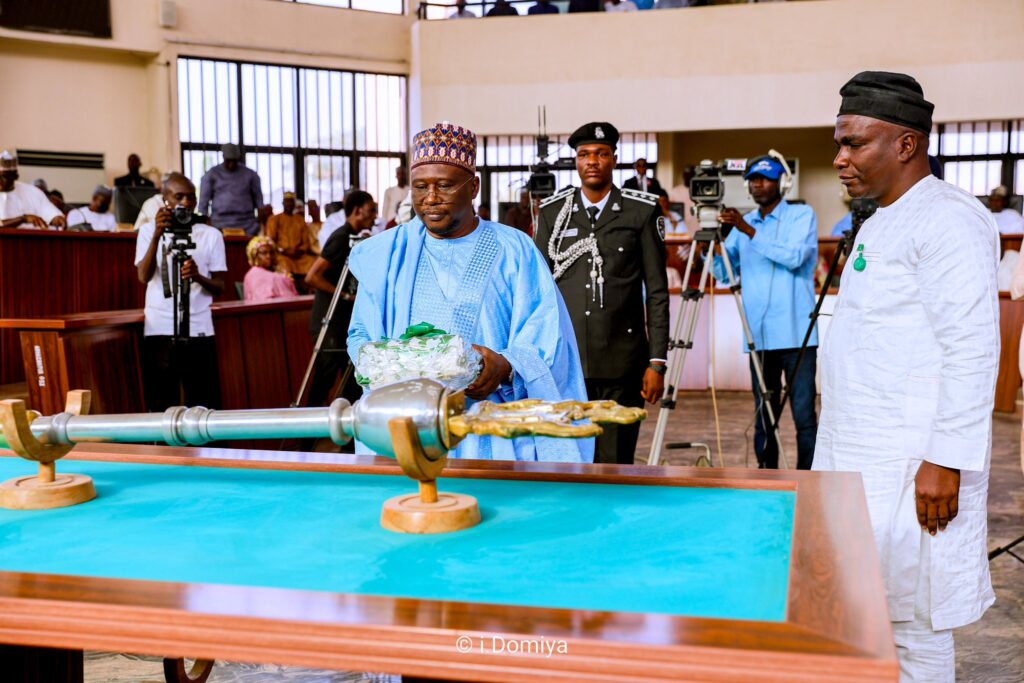
Governor Ahmadu Umaru Fintiri has presented a ₦583.33 billion Appropriation Bill for the 2026 fiscal year to the Adamawa State House of Assembly, describing it as a “Budget of Sustainable Growth and Economic Renewal.”The presentation, made on Thursday, was marked by a spirit of optimism and strong executive-legislative cooperation. It represents the governor’s sixth budget proposal since assuming office and is designed to promote inclusive development amid prevailing national economic challenges.Addressing lawmakers as “our House, our home,” Governor Fintiri said the budget was the product of wide consultations involving the Executive Council, the legislature, and grassroots stakeholders, and is firmly anchored on his administration’s 8-Point Development Agenda.
He commended the Assembly for its effective oversight, efficiency, and commitment to public service.The governor highlighted key milestones recorded by his administration, including the Fintiri Business Wallet initiative, which has empowered 60,000 women and youths. He announced that an additional 100,000 beneficiaries would begin receiving ₦50,000 each from this month, a move expected to impact nearly 700,000 residents and significantly reduce poverty levels.Adamawa State, he noted, was among the first to implement the new ₦70,000 minimum wage, while progress has also been made in e-governance, education, and healthcare. Twenty-one model schools are scheduled for commissioning in 2026, while the Fintiri Wings Scholarship Scheme has facilitated the overseas education of 100 students in Turkey. Cottage hospitals are operational across the state, alongside ongoing upgrades of general hospitals.The governor also cited ongoing infrastructure projects in water supply, markets, electricity, and road construction, as well as the near-completion of the Yola ultramodern stadium.On the economic front, Fintiri disclosed that Adamawa’s Ease of Doing Business ranking improved from 23rd to 4th following the implementation of SABER reforms. The state has maintained a top-five national ranking in fiscal transparency since 2023, reduced its debt profile by over 50 percent, and earned a BBB+ investment-grade credit rating.Institutional reforms in the traditional system, including the creation of new emirates and chiefdoms, were also highlighted as measures that have strengthened security, enhanced dispute resolution, and promoted social cohesion.Reviewing the performance of the revised 2025 budget of ₦621.29 billion, the governor revealed that as of September, revenue performance stood at 37.9 percent, while expenditure reached 30.5 percent, with a strong emphasis on capital projects despite revenue inflow challenges.The 2026 budget is predicated on a benchmark oil price of $75 per barrel and an exchange rate of ₦1,443 to the dollar. It proposes a capital expenditure of ₦373.69 billion, representing 64.06 percent of the total budget, while recurrent spending stands at ₦209.64 billion or 35.94 percent. Major revenue sources include Statutory Allocation (23.16 percent), Value Added Tax (18.23 percent), and Capital Receipts (12.20 percent).Sector-by-sector allocations include ₦120.86 billion for Works and Energy, ₦40.63 billion for Education, ₦31.93 billion for Health, ₦27.02 billion for Housing, and substantial funding for commerce, youth development, poverty alleviation, and tertiary institutions.Governor Fintiri outlined key policy priorities such as full compliance with IPSAS, expansion of e-budgeting, growth of Internally Generated Revenue, clearance of pension arrears, and alignment with the Sustainable Development Goals.
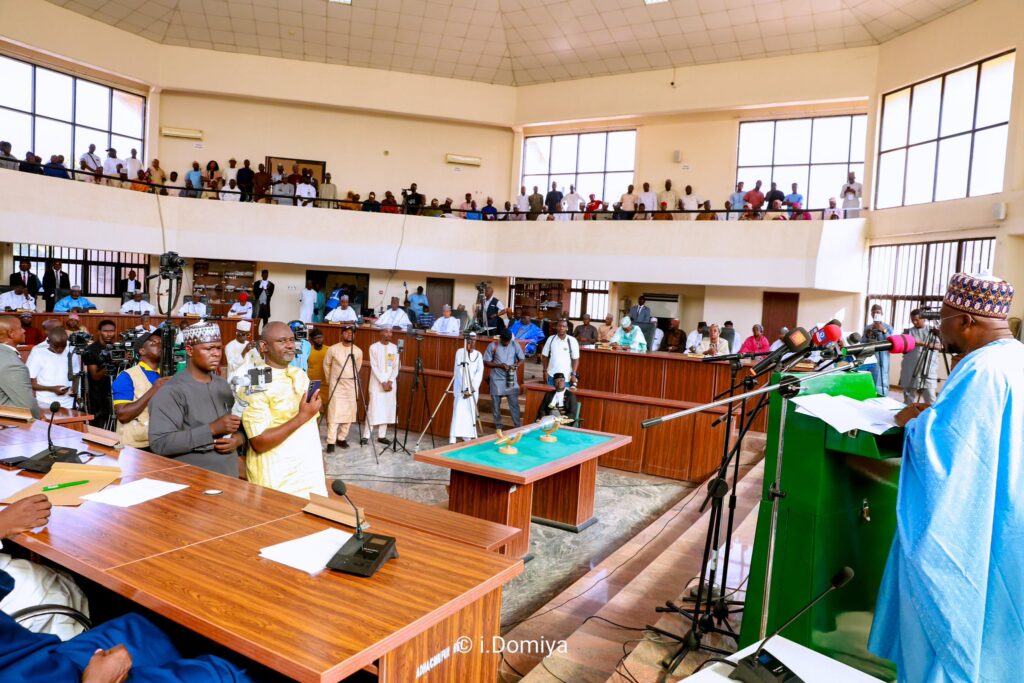
He emphasized that the prevailing peace in Adamawa provides a solid foundation for investment and economic expansion.He concluded by appreciating the cordial relationship between the executive and the legislature, extending festive greetings, and urging lawmakers to give the budget prompt and favourable consideration.In his response, the Speaker of the House of Assembly, Rt. Hon. Bathiya Wesley, assured the governor that the legislature would subject the proposal to thorough scrutiny in the interest of the people.Economic analysts have described the 2026 budget as pragmatic, noting its strong focus on completing ongoing projects and deepening social investments to drive sustainable growth and economic renewal in the state.
About The Author
